 Brice Eliasse

You've read the posts. You've heard the conference talks. Test Driven Development, or TDD, promises cleaner code, fewer bugs, and a more deliberate design process. Yet for many developers, the leap from theory to practice feels daunting. Where do you begin on a real project? What does a failing test even look like when you're building a React component or a Node.js API?
This guide is for the web developer ready to move past the hype and into the workflow. We'll focus on the mechanics of TDD, providing clear, executable steps you can apply to your next feature. You'll learn the fundamental cycle, how to set up your environment for fast feedback, and the tangible benefits you can expect from the first week of practice. More importantly, we'll address the common frustrations that cause teams to abandon TDD, so you can anticipate and navigate them.
Test Driven Development isn't a silver bullet, but for the right problems, it's a transformative discipline. Let's build your first test.
The Core Rhythm: Understanding Red, Green, Refactor
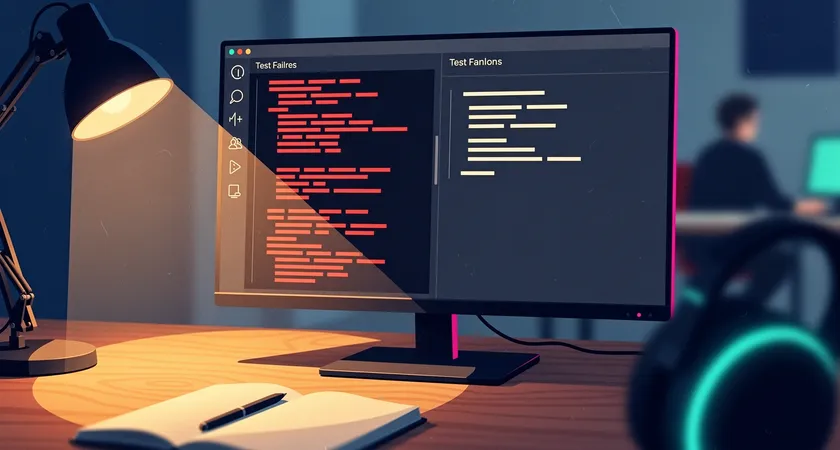
Imagine you're adding a form validation function. Instead of writing the function and then, as an afterthought, creating a test for it, TDD flips the script. You start by writing a test that describes the exact behavior you need. Since the function doesn't exist, that test will fail. This is the first and most critical phase: Red.
Seeing a test fail might feel counterintuitive, but it serves two vital purposes. First, it proves your test is actually executing and can detect the absence of the functionality. A test that passes immediately is useless. Second, it defines a clear, singular goal. Your job is no longer "write validation logic"; it's "make this specific test pass."
Next, you write the absolute minimum amount of code required to turn that red failure into a Green passing test. This is not the time for elegant abstractions or future-proofing. If the test expects a function to return true for a valid email, you might initially hardcode `return true`. This feels silly, but it reinforces the discipline: only write code demanded by a failing test.
Once the test passes, you enter the Refactor stage. Now, with the safety net of a passing test, you can improve your code. Clean up the hardcoded return, extract a regex into a constant, rename a variable for clarity. The test ensures your improvements don't break the specified behavior. This three-step cycle, Red, Green, Refactor, is the heartbeat of TDD, repeated for every tiny slice of functionality.
Setting Up Your First TDD Environment for Web Development
A slow test suite is the fastest way to kill a TDD practice. The feedback loop must be nearly instantaneous. For a modern JavaScript project, this means choosing and configuring the right tools from the start.
Your testing framework is the foundation. For a Node.js backend or vanilla JS library, Jest is a popular, batteries-included choice. It runs tests in parallel, provides built-in assertions, and offers a watch mode that re-runs tests on file changes. For front-end work involving components, a combination like Vitest (for speed) and Testing Library (for user-centric queries) is becoming a standard. The key is that running your test suite should take seconds, not minutes.
Integration with your editor is the next multiplier. You need to see test results without leaving your coding context. Most modern editors have extensions that show inline pass/fail status next to your `it()` or `test()` blocks. Configuring a keyboard shortcut to run the current test file is essential. This tight integration makes the Red-Green-Refactor cycle fluid, keeping you in a state of flow.
Finally, consider your project's run scripts. A typical `package.json` setup for TDD might include:
npm test: Runs the full test suite once for CI/CD.npm run test:watch: Starts the test runner in watch mode, re-executing on save.npm run test:coverage: Generates a coverage report to identify untested code paths.
With this environment, you can make a change, save, and know within two seconds if you've broken something. That immediacy is what makes TDD a practical design tool, not a burdensome ritual.
Writing That First Meaningful Failing Test
Let's move beyond `1 + 1 = 2`. Suppose you have a utility function, `formatDisplayDate(dateString)`. The product manager wants dates shown as "April 26, 2023". A novice might jump into the function logic. Instead, you open the test file and write:
import { formatDisplayDate } from './dateUtils';
describe('formatDisplayDate', () => {
 it('formats an ISO date string to a readable month-day-year format', () => {
 const input = '2023-04-26T10:30:00Z';
 const result = formatDisplayDate(input);
 expect(result).toBe('April 26, 2023');
 });
});
You run the test. It fails spectacularly. Perhaps the function is undefined, or it returns `null`. This is your Red state. The error message is your guide. Now you implement just enough in `dateUtils.js`: `export function formatDisplayDate(dateString) { return 'April 26, 2023'; }`. Run the test. It passes. Green. Now you can refactor, replacing the hardcoded return with actual date parsing logic. Then you add a second test for an edge case, like handling an invalid string, and the cycle begins again.

TDD in Action: Building a UI Component
Front-end TDD often causes the most confusion. You're not testing that a div exists; you're testing behavior. How does the component respond to user input or new props? Using React and Testing Library, the philosophy is to test what the user experiences.
Consider a `
This component-level TDD forces you to think about the component's API and interactions from the outside in. You define how it should be used through tests before writing its internal state logic. The result is often a more modular, predictable component that's easier to integrate and refactor later. You avoid the common pitfall of building a complex internal state machine that becomes difficult to connect to the rest of your app.
When Testing Becomes a Design Tool
This is where TDD transcends mere bug prevention. As you write tests first, you are forced to design the interface of your function or module. You have to decide what it's called, what parameters it takes, and what it returns. This act of specification often reveals ambiguities in the initial requirement.
For instance, that `formatDisplayDate` function. Should it throw an error on invalid input, return `null`, or return an empty string? The product manager might not have considered this. Writing the test for the edge case forces that conversation early, when the cost of change is low. The test suite becomes a living, executable specification of what the system does, which is invaluable for onboarding new developers or validating assumptions months later.
Navigating Common Pitfalls and Resistance
Most teams that try and abandon TDD stumble on the same obstacles. The first is attempting to write tests for everything, especially complex third-party integrations or visual CSS. A pragmatic rule is to focus TDD on your business logic, the code you write that encodes your application's unique rules. Don't try to TDD a call to Stripe's API; instead, wrap that call in a thin module and write tests for your own pricing calculation logic that uses that module.
Another frequent issue is the "legacy code trap." Trying to apply strict TDD to a large, untested existing codebase is overwhelming and demoralizing. The better approach is the Boy Scout Rule: leave the code cleaner than you found it. When you need to modify a function in legacy code, write a test for the new behavior you're adding first. Over time, these tests create pockets of safety that allow for more confident refactoring of the surrounding code.
Team culture is the silent killer. If TDD is seen as an individual's optional practice, it will die. It requires a shared understanding and commitment. This often means pairing up to write tests initially, establishing team-wide definitions of "done" that include passing tests, and celebrating when a test suite catches a regression before it reaches production. The initial velocity may slow, but the long-term stability and reduced bug-fix debt almost always lead to a net gain.
The Limits of DIY and When to Seek Expertise
You can learn the TDD cycle in an afternoon. Cultivating a mature, sustainable testing practice across a product team is a different challenge. On the ground, we often see teams with a handful of enthusiastic developers writing great tests, while the majority of the codebase remains uncovered. This creates a two-tier system where changes in tested areas are confident and swift, while changes elsewhere are fraught with fear.
Bridging this gap requires more than technical knowledge. It involves creating sensible testing conventions (where do we put test files? what do we mock?), establishing a maintainable test data strategy, and integrating test quality into code review processes. Without these guardrails, test suites can become brittle, full of flaky tests that fail randomly or overly-specific tests that break with every minor refactor. A brittle suite is worse than no suite at all, as it erodes trust in the entire process.
This is where an outside perspective can be transformative. An experienced practitioner can audit your test suite not just for coverage, but for health. They can identify the patterns causing brittleness, recommend tooling adjustments to shave critical seconds off the run time, and help design a scaffolding strategy for new developers. More importantly, they can facilitate the team conversations that align engineering practices with business priorities, ensuring the testing strategy protects what matters most to the product's success.
The goal is not dogma, but efficacy. The most successful TDD implementations we see are those adapted to the team's context, perhaps it's "Test Driven Design" for critical modules and "Test After" for straightforward UI. The expertise lies in knowing that difference and building a disciplined, but not dogmatic, quality culture around it.

Getting started with Test Driven Development is about embracing a new rhythm of work. It begins with a single, failing test. That red failure is not a sign of error, but of a clear direction. The cycle that follows, writing minimal code to pass, then refining with confidence, builds a codebase that is not just tested, but thoughtfully designed.
The initial learning curve is real. Your first tests will feel awkward, and your progress may seem slow. Focus on the immediate payoff: the moment your test catches a bug you just introduced, before you even switch browser tabs. That feeling of confidence is the core value proposition.
Start small. Pick one new function in your current project and write the test first. Get your environment to the point where feedback is instant. As the practice becomes familiar, you'll start to see how tests shape better design decisions and create a living documentation that outlasts any README file. For teams looking to scale this practice, the challenge shifts from syntax to strategy, crafting a sustainable approach that keeps the suite fast, reliable, and focused on what truly matters for your application's quality.