 Brice Eliasse
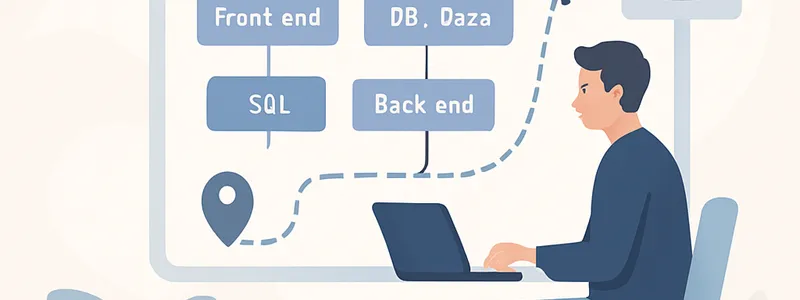
Welcome to a transformative journey into the world of web development, where the Full Stack Developer Roadmap stands as the compass for both ambitious beginners and seasoned professionals. Navigating this roadmap can be daunting, with evolving frameworks, dynamic UI/UX advancements, ever-present SEO demands, and the complexities of project management. Yet, understanding its key milestones, essential skills, and best practices is the smartest way to build a robust career—or deliver outstanding digital products.
Whether you're launching a new career or scaling your tech team, mastering the intricacies of full stack development paves the way to innovation, agility, and competitive advantage. Let's unravel the roadmap, examine core technologies, and reveal why expert guidance can turn challenges into seamless success stories.

Foundations of the Full Stack Developer Roadmap
The journey toward becoming a full stack developer starts with building a strong foundation. Every successful developer, regardless of their background, must first grasp the fundamental concepts that shape both the frontend and backend landscapes. Let's delve into these core competencies and shine a light on how they fuel practical, real-world solutions.
The Importance of Core Web Technologies
The web is built on three pillars: HTML, CSS, and JavaScript. These essential technologies enable the creation of engaging, interactive, and visually appealing digital experiences. HTML provides structure; CSS adds style and layout finesse; JavaScript brings interactivity and dynamic behavior. Imagine constructing a business website without mastering these elements—chances are, the result would be uninspiring and rigid.
According to Stack Overflow's 2023 Developer Survey, JavaScript remains the most popular language among developers globally. This fact reflects not only its indispensable nature but also how vital it is for aspiring developers to master it early on.
To get started:
- Practice building simple web pages using HTML5 semantic tags
- Create responsive layouts with CSS Grid and Flexbox
- Experiment with JavaScript to add simple interactions
Consider the case of a small e-commerce site: even before considering complex backend logic, the path to a seamless shopping experience is paved with solid HTML templates, on-brand CSS, and intuitive JavaScript-driven navigation.
Are you overlooking these basics in your roadmap?

Understanding Frontend and Backend Fundamentals
The universe of full stack development splits into two: frontend (client-side) and backend (server-side). The frontend is where users interact: think buttons, menus, forms, and animations. Mastering libraries and frameworks like React, Vue.js, or Angular elevates your web interfaces by making them modular, maintainable, and scalable. Backend, on the other hand, is where data storage, application logic, authentication, and server management occur—skills honed with Node.js, Python/Django, Ruby on Rails, and more.
Practical example: You develop a web dashboard for an HR company. The frontend, built in React, fetches employee data through API calls to a Node.js backend connected to a PostgreSQL database. Implementing solid data validation and security protocols ensures not only a beautiful, but also a secure and reliable digital product.
Key points:
- Frontend: User experience, design, responsiveness, accessibility.
- Backend: APIs, data storage, business logic, server management.
It’s essential for aspiring full stack developers to demystify both sides—not just to write code, but to craft genuinely integrated solutions.
Integrating Version Control and Collaboration Tools
No developer roadmap is complete without learning version control—particularly Git and platforms like GitHub or GitLab. Version control is more than code tracking; it’s about team collaboration, accountability, and transparency. Imagine rewinding to a previous version before a critical error, or working simultaneously with global teammates on the same project. These tools underpin modern dev workflows and support the move towards agile and continuous integration practices.
For professionals, early mastery of version control opens doors to larger team projects and significant freelance opportunities. For companies, employing a team that understands Git workflows can drastically reduce deployment risks and development costs. Missing these elements can lead to costly project rollbacks or lost productivity.
- Set up your Git repository—locally and online
- Practice branching and merging to experiment safely
- Collaborate on small open-source projects for hands-on experience
Transitioning to advanced parts of the roadmap? It’s time to expand from these foundations and explore modern technologies.

Navigating Frontend Technologies and Best Practices
After laying the groundwork, the journey continues with intricate but exciting developments in frontend technologies. This section explores how modern frameworks, UI/UX principles, and accessibility standards are shaping today's digital products. Understanding and implementing these best practices is essential—not just for technical prowess, but for launching competitive, user-centered platforms.
Modern JavaScript Frameworks: React, Vue, and Angular
Framework mastery stands at the heart of the Full Stack Developer Roadmap. React, developed by Meta, boasts a virtual DOM for fast rendering, making it ideal for interactive, high-performance sites. Vue.js is lightweight, approachable, and excels in gradual adoption for existing projects. Angular provides a full-featured, enterprise-ready solution. Each framework has unique strengths, yet all share a commitment to modularity, reusable components, and maintainability.
Let’s imagine you’re tasked with developing a dashboard for a fintech startup. By adopting React, you can quickly build dynamic components, manage complex application state with libraries like Redux, and speed up user interactions. Vue might be your choice for a progressive redesign, seamlessly blending with legacy code.
- React: Virtual DOM, JSX, vibrant ecosystem
- Vue: Lightweight, flexible, gentle learning curve
- Angular: TypeScript-based, built-in tools for large-scale applications
Mastery in these frameworks is so in-demand that a 2023 LinkedIn report identified React as one of the most needed tech skills worldwide. Ignoring modern frontend frameworks means missing out on both job opportunities and cutting-edge solutions for clients.

Design Systems and UI/UX Principles
Developers must now wear both an engineer’s and a designer’s hat. UI/UX principles are more than attractive colors—they’re about usability, accessibility, and guiding users effortlessly. A good design system ensures brand consistency, code reusability, and faster prototyping. Examples include Google’s Material UI and Tailwind CSS.
Working on a SaaS platform? Using a consistent design system can reduce onboarding time for new users and developers alike, ensuring that every button, modal, and interaction aligns with best practices and accessibility standards.
Some core UI/UX action points:
- Embrace mobile-first and responsive design principles
- Test for accessibility—think color contrast, keyboard navigation, screen reader compatibility
- Develop reusable component libraries for scalable growth
Lack of strong UI/UX foundations can lead to user frustration, higher bounce rates, and, ultimately, lost revenue. In today’s digital economy, good design is good business.
Frontend Build Tools and Performance Optimization
The modern frontend is powerful, but complexity can quickly lead to sluggish loading times and bloated applications. Tools like Webpack, Vite, and Parcel automate bundling, code splitting, and asset optimization. Integrating performance best practices—such as lazy loading assets, compressing images, and using service workers—translates into faster, more reliable user experiences.
Example in action: An e-learning platform that implements code splitting to load only essential modules on student login. The result? Reduced initial load times, improved SEO, and happier, more engaged users.
- Minimize JavaScript and CSS to reduce render-blocking
- Utilize tree shaking and code splitting for leaner builds
- Monitor real user metrics using Lighthouse and Google Analytics
Performance optimization isn't just a luxury; it’s a competitive necessity. A Google study shows that as page load time increases from one to five seconds, the probability of users bouncing increases by 90%.
Transitioning from frontend mastery, the next step involves understanding the backbone of digital applications: the backend.

Mastering Backend Technologies and Database Management
Now, let's venture beyond the visible and into the powerful engine room of full stack development—the backend. This is where the logic, data, and security best practices converge to deliver seamless digital experiences. Excelling in backend technologies and proper database management is not only a roadmap milestone but also a guarantee of scaling potential, reliability, and data integrity.
The Role of Server-Side Languages and Frameworks
Choosing the right server-side language and framework determines not only your application’s speed but also its scalability and maintainability. Node.js allows developers to run JavaScript on the server, providing event-driven, non-blocking capabilities perfect for real-time apps like chat platforms. Python (with Django or Flask) is lauded for its readability and rapid prototyping. Ruby on Rails emphasizes convention over configuration, ideal for startups needing to launch rapidly.
Consider a healthtech platform requiring secure, real-time data processing and analytics. Selecting Node.js for real-time engagement, combined with robust authentication via Passport.js, ensures not only speedy development but also patient data protection.
- Node.js: Real-time, efficient, vast ecosystem
- Python/Django: Rapid prototyping, data science compatibility
- Ruby on Rails: Convention over configuration, mature libraries
Each framework and language brings unique strengths to specific use cases. Ignoring backend best practices can compromise security, slow down performance, and risk regulatory compliance.
Database Design: SQL vs. NoSQL
At the heart of any application lies data. Choosing between SQL (relational) and NoSQL (non-relational) databases influences data structure, scalability, and flexibility. SQL databases like PostgreSQL or MySQL are great for structured, transactional applications (e.g., banking, e-commerce platforms). NoSQL solutions such as MongoDB offer flexibility and horizontal scaling, perfect for big data and real-time analytics.
Case study: For a social media app, MongoDB’s flexible schema enables rapid iteration of features without costly migrations. Conversely, a fintech startup depends on PostgreSQL to ensure consistency and transactional integrity—crucial when dealing with financial data.
Practical tips:
- Assess your application's data needs before choosing the database
- Implement data validation and indexing for performance
- Back up and monitor your databases diligently
Failing to master database design can result in slow queries, unhappy users, and costly re-engineering.
Authentication, Security, and API Design
Security is no longer optional. As attacks grow in frequency and sophistication, robust authentication (OAuth, JWT) and secure API design are non-negotiable. A well-designed REST or GraphQL API connects the frontend and backend safely, efficiently, and scalably.
Real-world example: An online marketplace uses JWT-based authentication, validating user roles and permissions for each request. Secure API endpoints ensure that sensitive business logic and user data remain protected from malicious actors.
Action items:
- Implement HTTPS by default and use environment variables for sensitive configs
- Regularly patch dependencies and monitor for vulnerabilities
- Document APIs with tools like Swagger or Postman
The backend sets the reliability and trustworthiness of your platform. As you evolve on the roadmap, seamless integration is the thread binding frontend and backend together.

Integration, Deployment, and Project Management
Having mastered both frontend and backend disciplines, the next challenge is integration and deployment—a domain where technical expertise intersects with real-world business needs. Properly managed integration, deployment pipelines, and agile project management ensure that your work moves from code to customer smoothly, securely, and efficiently.
Continuous Integration and Automated Deployment
Modern web applications rarely sit stagnantly; they’re continuously evolving. Continuous Integration (CI) tools like Jenkins, TravisCI, and GitHub Actions automate testing, merging, and deployment, delivering updates reliably. Containerization with Docker or orchestration using Kubernetes ensures consistent environments and scalable deployments.
For instance, an online booking platform uses CI to automatically test code changes and deploy new features multiple times a week. This agility accelerates innovation, eliminates deployment bottlenecks, and reduces human error.
Benefits of CI/CD:
- Catch bugs early with automated tests
- Speed up feature delivery
- Release with confidence and rollback easily if needed
Neglecting deployment best practices can result in slow releases, inconsistent user experiences, or even catastrophic downtime—affecting your business reputation.
Project Management: Agile, Scrum, and Beyond
The success of a web development project isn’t just technical—it’s about people, process, and priorities. Agile and Scrum methodologies bring structure to the madness. Regular sprints, clear backlogs, and daily stand-ups align multidisciplinary teams on key deliverables.
Example: A mobile app startup transforms its chaotic workflow by adopting Scrum, dividing work into two-week sprints. As a result, they reduce delays, increase stakeholder engagement, and achieve predictable, value-driven releases.
Key factors for success:
- Set clear, measurable goals and prioritize tasks
- Maintain open communication across development, design, and business units
- Collect feedback early and iterate rapidly
A skilled full stack developer leverages these methodologies to move from isolated coding tasks to delivering whole, market-ready solutions.
The Commercial Case for Qualified Partners
Navigating the full stack roadmap is no light challenge. It requires multi-domain expertise, up-to-date knowledge, and a keen business sense. Many organizations choose to collaborate with freelance web developers or agencies that already traverse this roadmap daily.
If your digital project is facing stalled launches, unclear responsibilities, or underwhelming results, it might not be an issue of ambition but one of expertise. Enlisting a skilled partner ensures:
- Accelerated delivery and reduced time-to-market
- Strategic guidance on technology choices and architecture
- Avoidance of costly pitfalls and technical debt
In a market where technology evolves fast, partnering with a full stack expert secures your investment—and frees you to focus on growth.
Conclusion: Turning Full Stack Challenges into Opportunities
The Full Stack Developer Roadmap is more than a list of skills—it’s a strategic framework for creating impactful, resilient digital solutions. From foundational technologies to advanced integration and agile management, each stage brings unique challenges and opportunities.
Yet, with complexity comes the risk of missteps. Whether you're an aspiring developer or an organization seeking cutting-edge products, the stakes are high. The ability to navigate backend intricacies, master frontend trends, and deliver under pressure distinguishes market leaders from the rest.
Don’t let your vision stall. Investing in professional guidance—be it through training or expert freelance support—can transform your roadmap from an overwhelming maze into a launchpad for success. Ready to build and grow? The next move is yours.